Latex & All Latex Mattresses Innerspring & Hybrid Mattresses..
About
Mattresses
Specifications
Science
Over The Bed
Under The Bed
About Geli Sleep
Geli Sleep is a founder-led sleep technology company created by Todd and Dr. Tara Youngblood, longtime product developers and co-inventors of the original ChiliPad sleep system. Although Geli itself is a newer company, its founders bring decades of experience developing consumer products and sleep technologies. Their roles are naturally complementary: Todd focuses primarily on business and operations, while Tara brings a background in physics, thermodynamics, and material science; both remain closely involved in product development.
Dr. Tara Youngblood Co-Founder & Chief Science Officer, Geli Sleep
Their return to mattress design grew out of an important lesson from their earlier work in temperature-controlled sleep: improving temperature can help sleep, but it cannot compensate for an uncomfortable or poorly matched sleep surface. That led them to look more closely at the interaction between temperature, pressure, support, and the materials directly beneath the sleeper.
The idea behind Geli’s distinctive gel-bead system arrived in a much less formal setting. During a family Thanksgiving, hydratable gel beads used in toy blasters prompted Tara to ask what would happen if gel could be shipped in a lightweight, dehydrated form and hydrated only after reaching its destination. That simple observation eventually developed into Geli’s modular, hydrated-bead technology — an approach intended to provide adaptable pressure redistribution and passive temperature management without relying on active cooling equipment.
That same curiosity continues to shape the company. Todd told TMU that one of their strengths is iteration: they actively value feedback from consumers, engineers, and other knowledgeable users and expect products to continue evolving rather than treating the first commercial version as the final answer. Their broader product-development work has resulted in more than 50 patents, many related to sleep.
Geli is also unusually candid about the tradeoffs that come with a different type of mattress. Its adjustable tube system requires more initial involvement than simply unboxing a conventional foam mattress, unless white-glove setup is selected. In exchange, the sleeper gains a system that can be adjusted and serviced in ways that conventional one-piece constructions generally cannot. Tara was equally direct with TMU that this added setup will not appeal to every consumer — something we consider useful information when helping shoppers determine whether a product is a good personal fit.
The Mattress and Specifications tabs explore Geli’s current mattresses, materials, construction, and Geli Bead technology in greater detail.
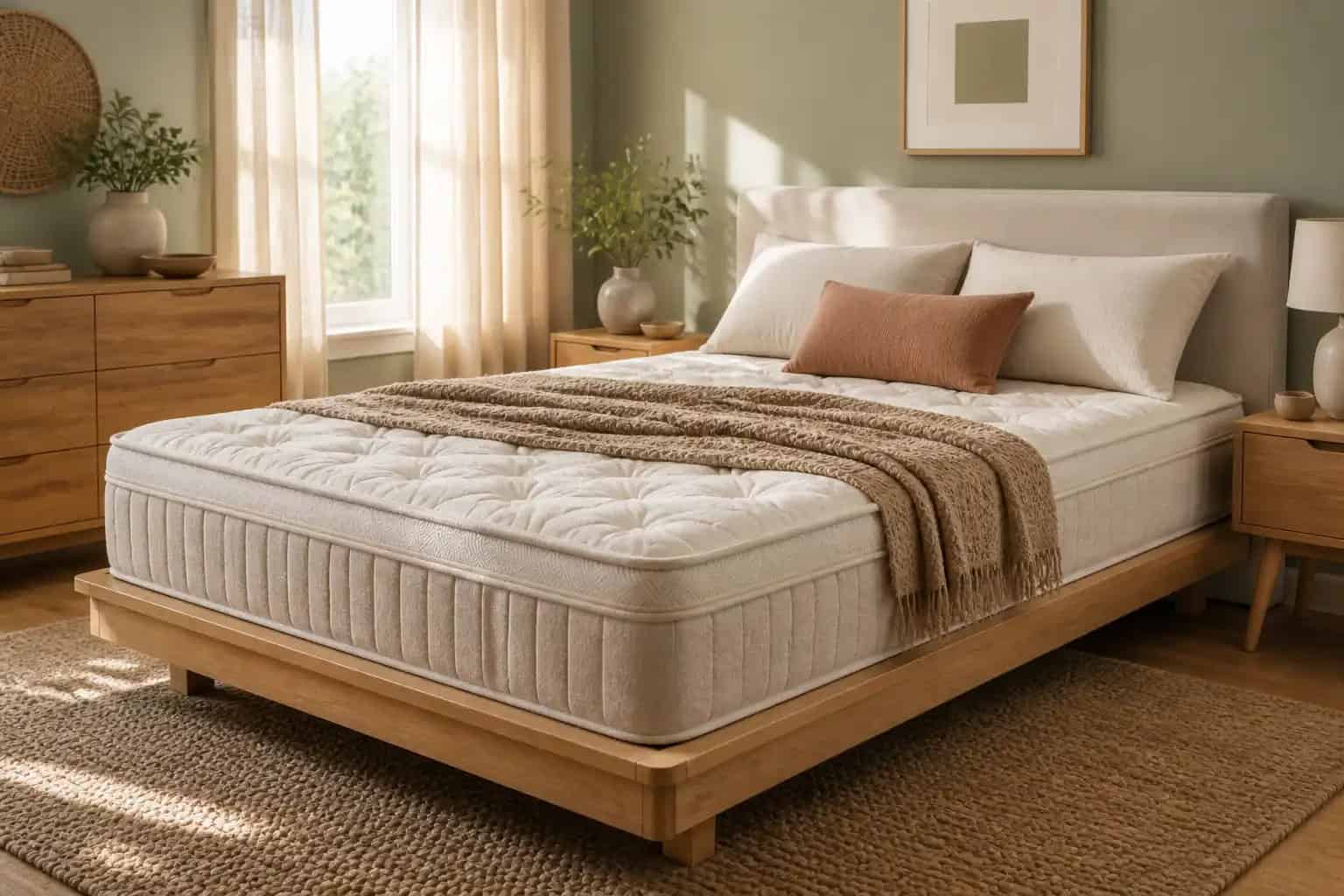
Hybrid, Medium-Firm (6.5/10), featuring patented Geli Bead technology,
adaptive comfort foam, and a pocket coil support system.
Available in Twin XL, Queen, King and California King.
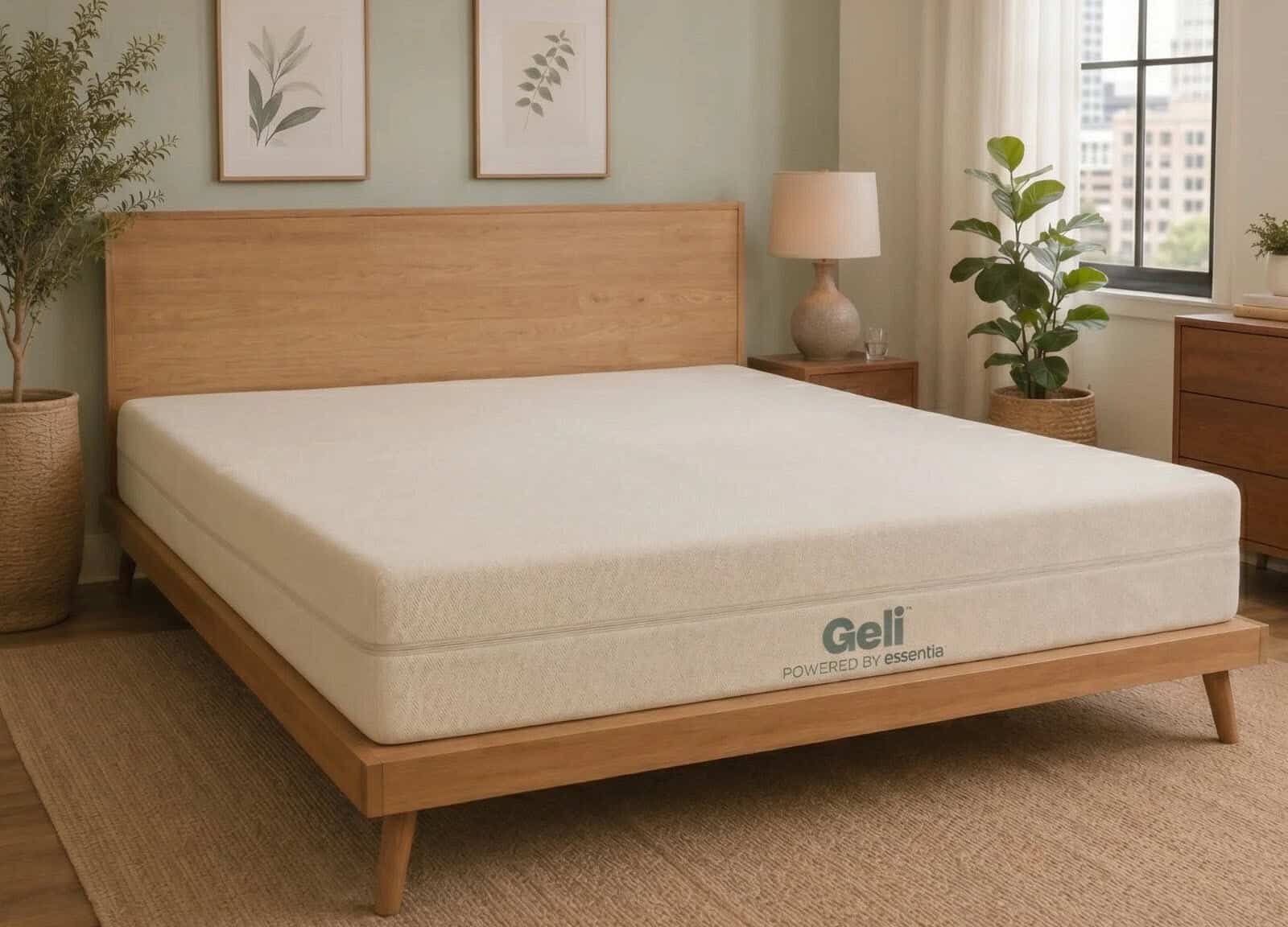
Geli Organic by Essentia combines Essentia’s latex-based construction with Geli Bead pressure-relief technology.
Organic latex mattress combining Essentia’s Beyond Latex technology
with Geli Bead pressure-relief technology.
Available in Queen, King, and California King.
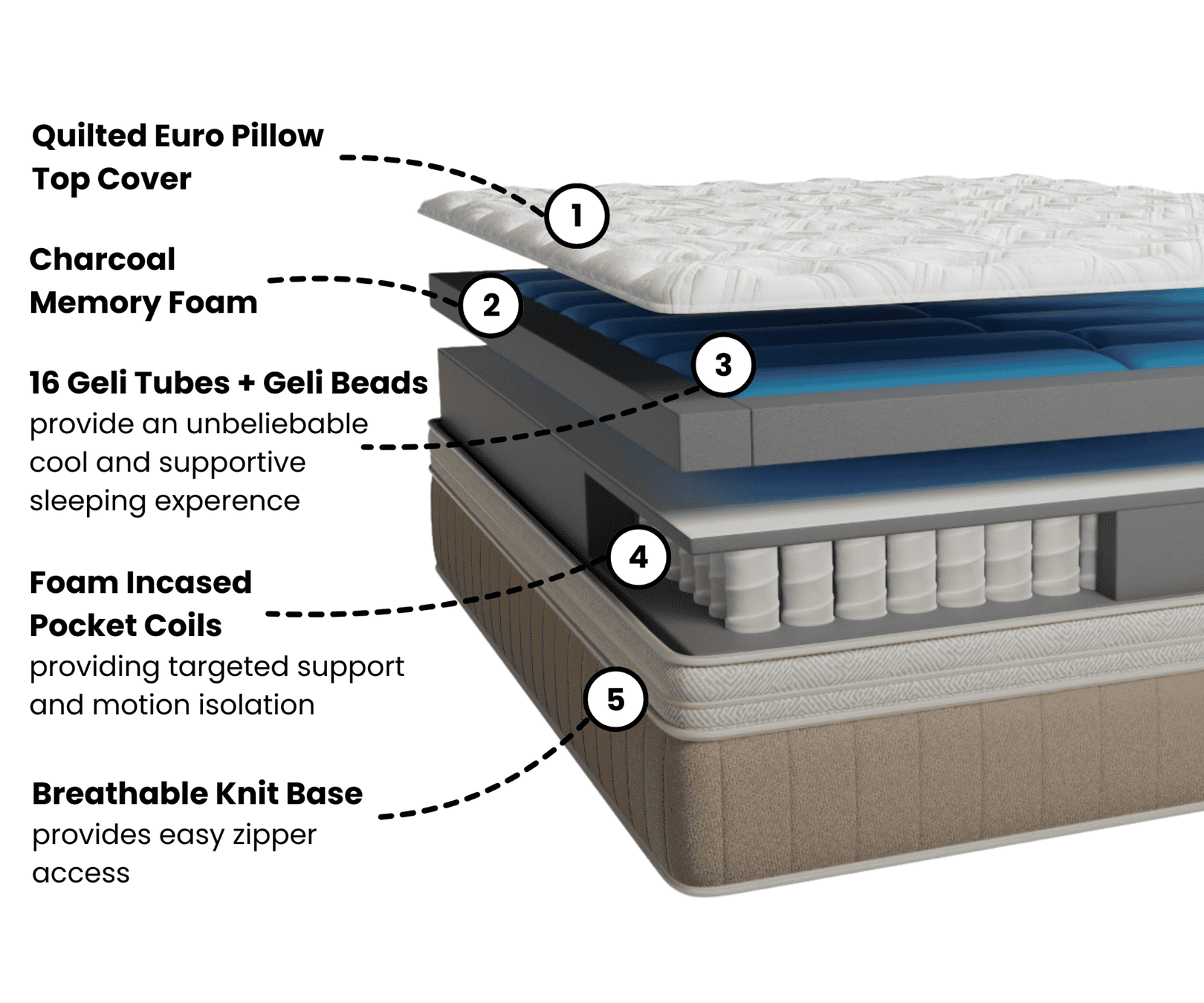
Geli Sova Mattress – 15″ hybrid mattress featuring patented Geli Bead cooling technology, adaptive comfort foam, and a pocket coil system. Available in Twin XL, Queen, King, and California King.
Cover: Organic cotton, removable & washable
Core: Patented Geli Bead tubes + support foam
Firmness: Medium-Firm (6.5/10)
Foam Encasement Around Pocket Coils: 1.5 lbs / 55 ILD
Geli Enclosure Rails: 1.8 lbs / 70 ILD
Foam Beneath Coil System: 1.5 lbs / 32 ILD
Certifications: CertiPUR-US certified foam
Queen Weight: ~85 lbs
Trial: 100-night sleep trial
Warranty: 10-year limited
Geli Organic Latex Mattress – by Essentia
Geli Organic by Essentia Mattress – 11″ organic latex mattress combining Essentia’s Beyond Latex technology with Geli Bead pressure-relief technology. Available in Queen, King, and California King.
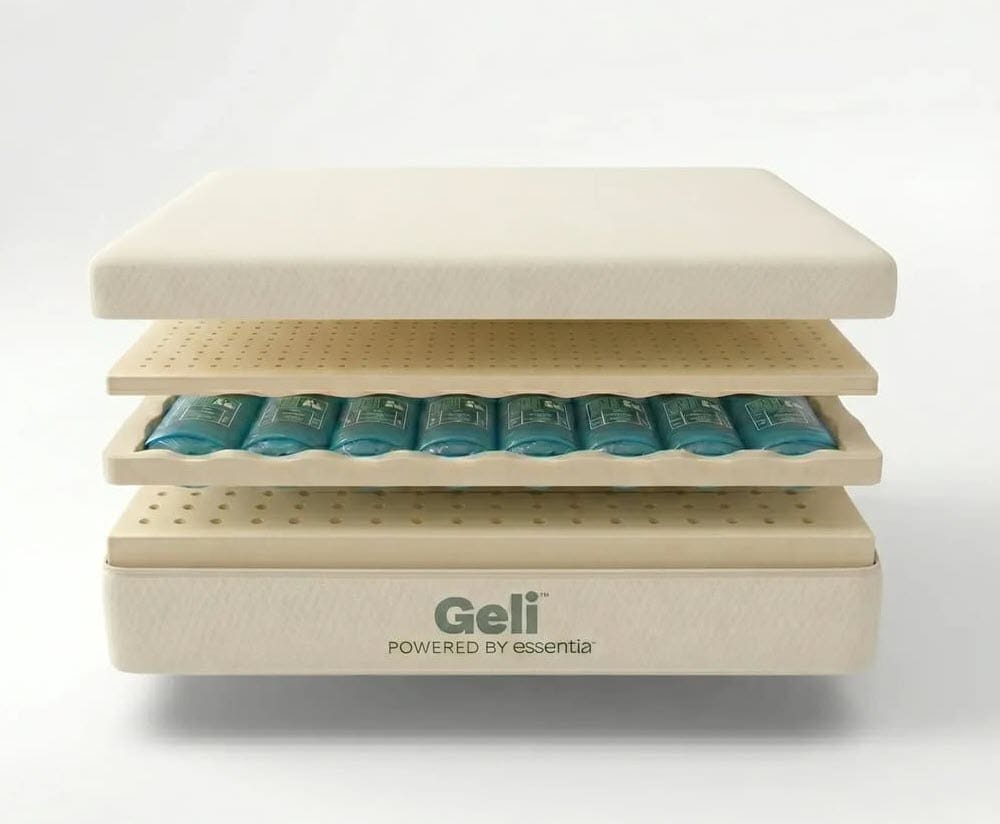
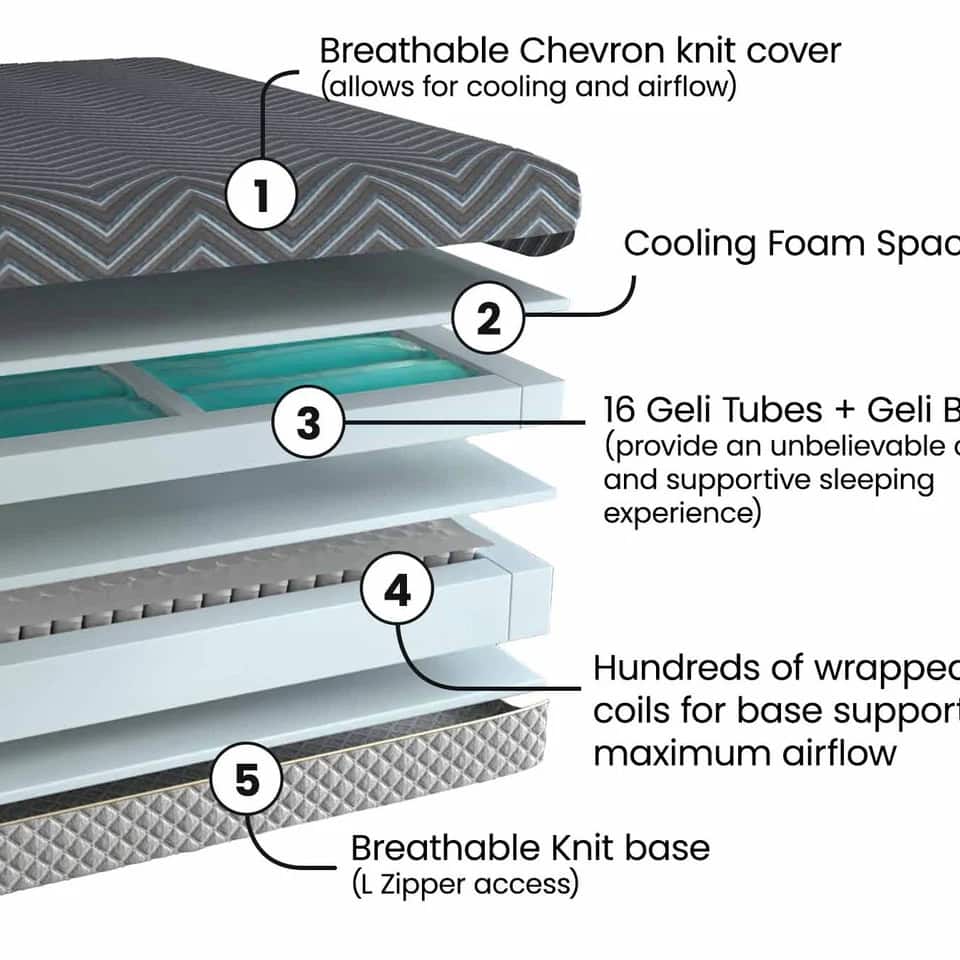
Geli’s central technology is quite different from the small amounts of gel commonly added to foam mattresses. Instead, the sleep surface uses individual flexible tubes containing hydrated polymer beads. The beads absorb water and form a semi-fluid mass that can move within each tube as load is applied.
According to Dr. Tara Youngblood, Geli experimented with different bead sizes before settling on a blend designed to strike a balance between fluid movement and structural stability. Very small beads alone tended to behave too much like loose material, while larger particles helped the mixture interact and resist the deep “bottoming out” associated with traditional waterbeds. The intention is to allow force applied at one point to spread through a larger portion of the tube rather than remaining highly concentrated directly beneath a shoulder, hip or other prominent area.
Pressure Redistribution Rather Than a Conventional Foam Response
Image 1: Geli tube/construction visual
Most conventional comfort layers manage pressure by compressing beneath the sleeper. Geli takes a somewhat different approach: the hydrated bead material can move laterally as well as compress, allowing load to redistribute along the tube.
The tubes are also modular. In the Queen configuration demonstrated to TMU, each side of the mattress uses eight tubes positioned across the sleeper’s body. The amount of water added to a tube changes its feel, allowing Soft, Medium and Firm settings and localized adjustment—for example, a softer region beneath a shoulder while maintaining firmer support elsewhere.
This is an important distinction: the adjustment is currently aimed primarily at pressure and firmness, rather than individually controlling temperature. Tara told TMU that thermal personalization is an area Geli has considered in its patent work, but it is not how the present mattress is adjusted.
What XSensor Pressure Mapping Found
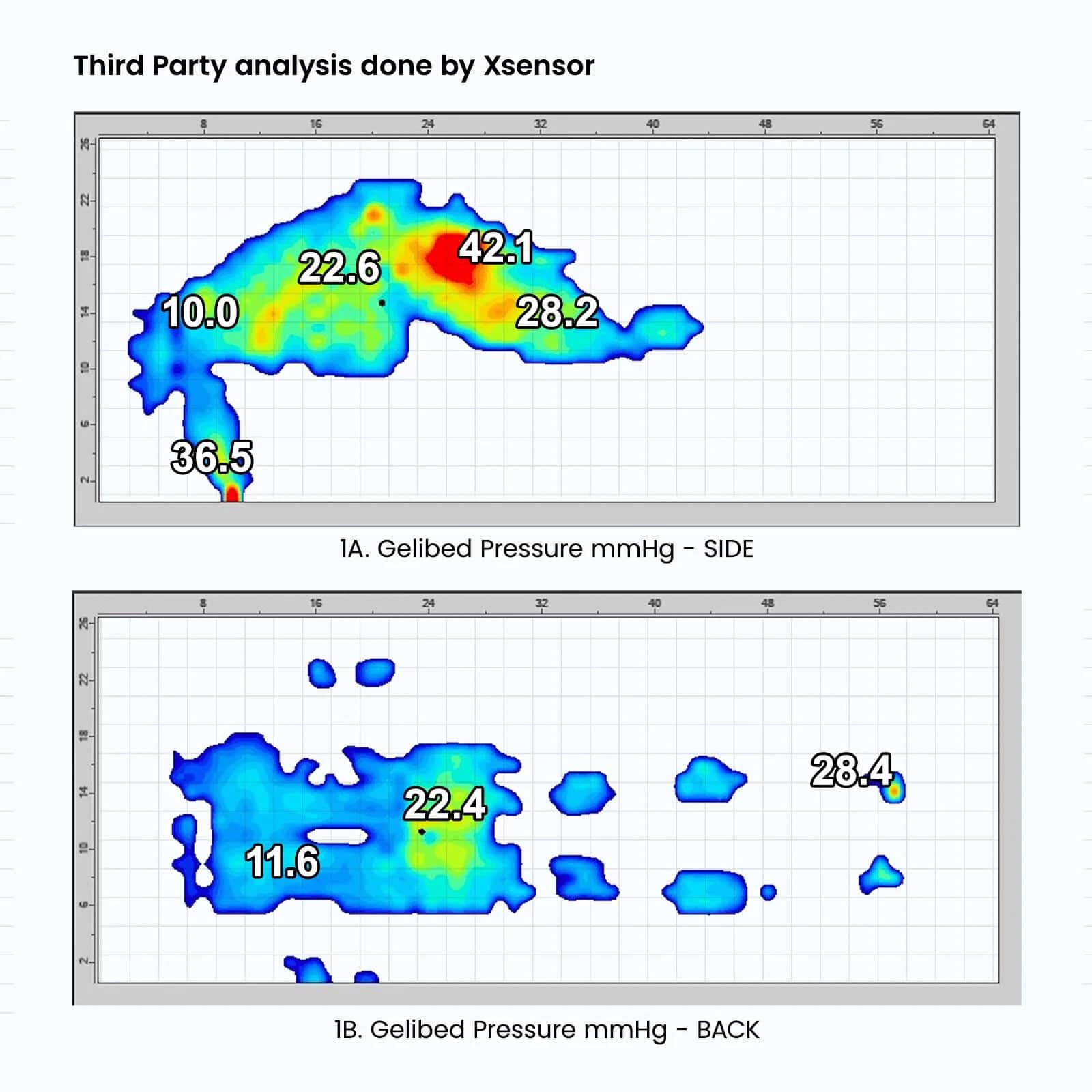
Image 2: XSENSOR pressure map
Geli has also subjected its mattresses to XSENSOR pressure mapping. XSENSOR manufactures high-resolution pressure-sensing systems used for mattress research and development as well as healthcare applications. Its mattress R&D systems measure the pressure distribution between a sleeper and the support surface and translate the readings into a visual pressure map.
Tara explained that the testing was performed by XSENSOR personnel rather than by Geli using its own in-house equipment. She said two test subjects were evaluated on Medium and Firm configurations; the Soft setting was not tested. Geli intentionally uses its Medium result in much of its consumer material because Medium represents the more commonly selected configuration rather than simply publishing the softest possible result.
Geli currently reports the following for the Sova:
28.2 mmHg mean supine interface pressure in its independent XSENSOR testing. Its current website also reports a 31.4 mmHg peak sacrum pressure and fewer than 5% of active sensor points above the testing protocol’s 32 mmHg reference.
The resulting pressure map is visually notable for the relatively broad distribution of load and the limited number of concentrated high-pressure areas.
A Note About the 32 mmHg Reference
You will frequently see 32 mmHg used when discussing pressure-relieving surfaces. The number comes from historic work on capillary closing pressure and has long been used as a reference point in support-surface research.
It is useful context, but TMU does not regard 32 mmHg as a universal dividing line between a “safe” and “damaging” mattress surface. Modern pressure-injury research recognizes that tissue response also depends on factors such as duration, shear, anatomy, tissue condition, and the location and depth of the load. Recent literature specifically cautions against applying the historic 32 mmHg value as a universal physiological threshold.
For that reason, we consider Geli’s XSENSOR results most useful as evidence of how effectively the surface distributes interface pressure under the conditions tested, rather than as proof of a particular medical outcome.
Passive Temperature Management
The hydrated bead system also introduces considerable thermal mass immediately beneath the sleeper.
Unlike active cooling systems, Geli does not use a pump, refrigeration unit, or circulating external water source. Instead, the water held inside the polymer beads can absorb heat as the sleeper warms the surface. Movement of the sleeper also causes some internal movement—or “churn”—of the semi-fluid material within each independent tube.
During our discussion, Tara described the approximately three-inch hydrated bead layer as functioning much like a passive heat reservoir. Geli’s internal thermal calculations estimate that, under the high-body-mass/high-metabolism scenario they modeled, the bead temperature would rise roughly 9.7–14.6°F over an eight-hour period from its starting room temperature. Those figures are calculations rather than direct overnight human thermal-testing results, so TMU would present them as Geli’s modeled performance until the underlying documentation is available.
This distinction is useful: pressure performance has been directly mapped with XSENSOR; the longer-duration thermal behavior is presently described by Geli primarily from material properties, calculations, and the founders’ prior thermal-sleep work.
What Makes the Approach Interesting
From TMU’s perspective, the more compelling aspect of the technology is not any single headline number. It is the combination of:
a large volume of hydrated material capable of moving beneath load;
modular tubes that allow localized firmness adjustment;
pressure mapping showing relatively even interface-pressure distribution;
significant passive thermal mass without an external powered cooling system; and
replaceable individual modules rather than a permanently sealed comfort system.
We are continuing to collect Geli’s underlying test reports, technical specifications and supporting research so that this section can become more detailed as the documentation is completed.
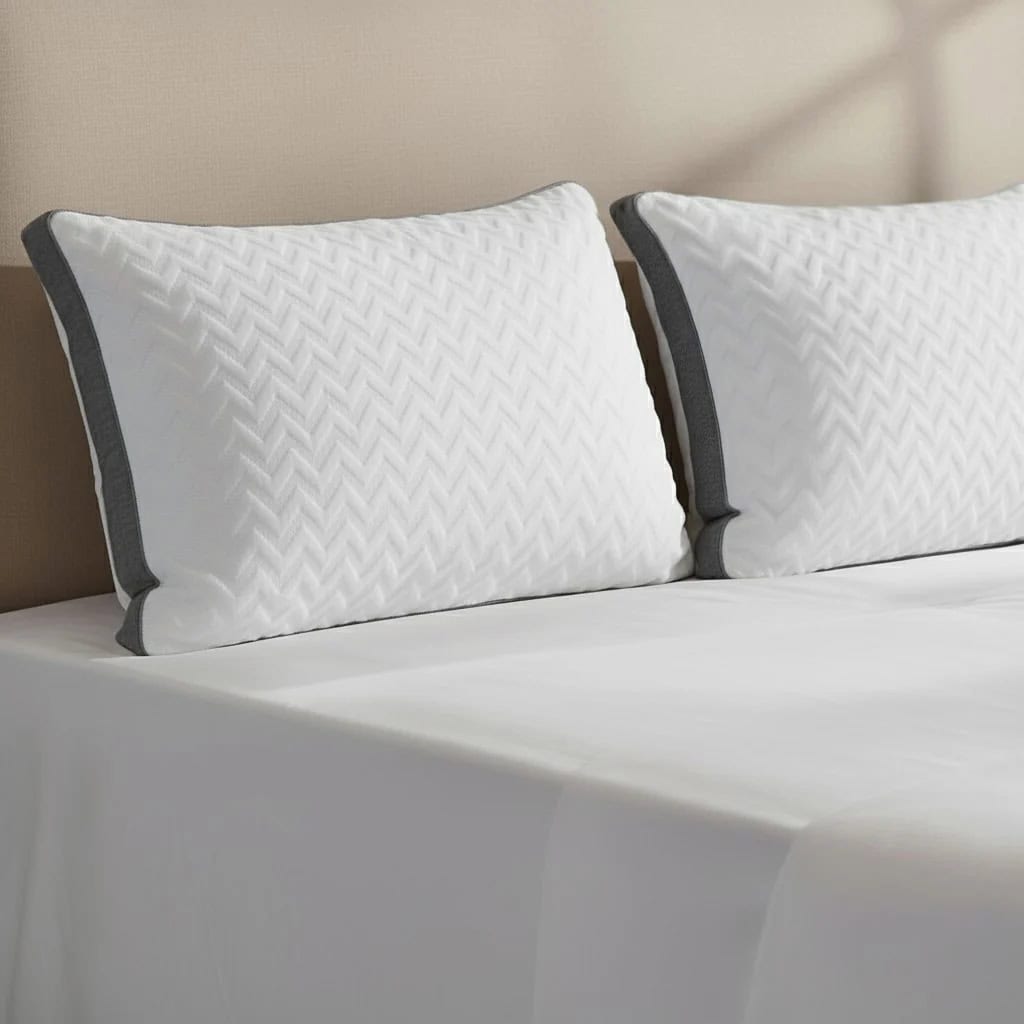
Geli Pillow with adjustable comfort layers and a Geli Bead insert designed for pressure relief and passive temperature regulation.
Technology: Patented Geli Bead technology with a responsive, adaptive layer
Cooling: Passive cooling without electricity or water
Support: Designed to conform to the head and neck for alignment and pressure relief
Construction: Three interchangeable layers with a dual-sided design
Loft: Adjustable by removing fill
Fill: Down Alternative Premium Polyester Fiber + Micro Cut Memory Foam (10% Polyester Fiber)
Cover: Cool-touch fabric; removable and machine washable
Made in: USA
Trial: 30-night risk-free trial
Warranty: 1-year limited warranty
Geli Adjustable Base
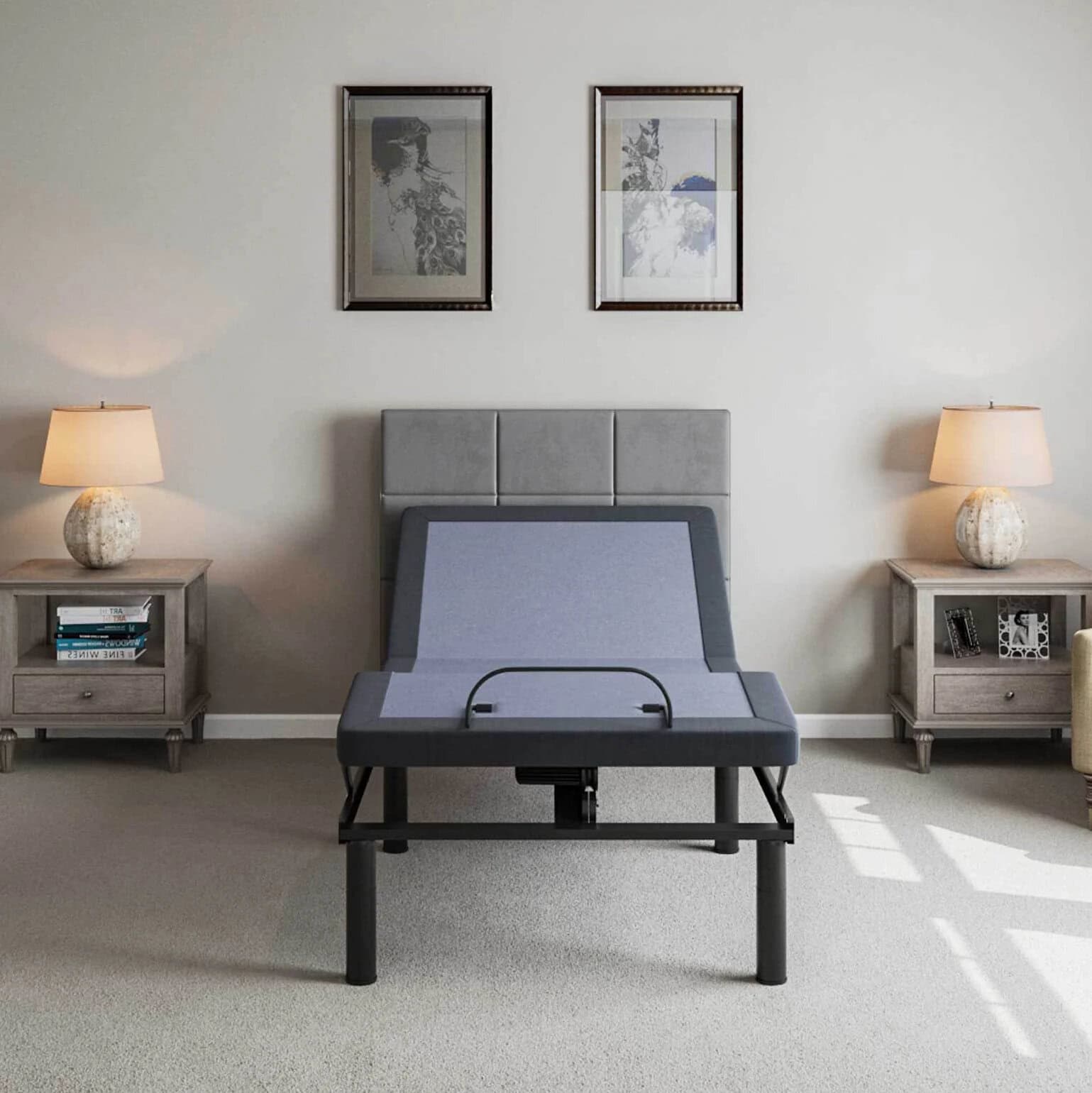
Geli Adjustable Base – Geli BT2000 Power Base ~ Power adjustable base with head and foot adjustment, zero-gravity positioning, programmable memory, 850-lb weight capacity, emergency battery backup, and adjustable legs.
Adjustable head and foot positions
850 lb. weight capacity
One-touch return-to-flat button
One programmable memory position
Hand control with built-in flashlight
Emergency battery backup box
12″ adjustable legs (8″ + 4″)
Steel frame
Available in Twin XL, Queen, King, and California King
As Geli Sleep begins its journey as a TMU Trusted Member, this section will bring together firsthand product experiences, technical discussions, and useful community feedback as they develop. Geli’s unusual adjustable bead technology gives consumers plenty to explore—from pressure relief and firmness customization to passive temperature regulation. Below, you’ll find early observations, TMU moderator feedback, and links to relevant Forum discussions as the community’s experience with Geli continues to grow.
Maverick Tests the Geli Pillow
Follow TMU moderator Maverick’s ongoing pillow journey as he puts the Geli Pillow through real-world use, with early observations on its cooling feel, firmness, support, and distinctive gel-bead design.
Future Consumer Experiences with Geli Sleep — Coming Soon
We’re looking forward to seeing this collection grow as more consumers experience Geli products and share their questions, observations, and purchasing experiences with the TMU community. More Geli discussions and consumer experiences will be added here as they develop.
Feel free to join our Mattress Forum and share your experience — your feedback can help other consumers make more informed choices.

 Mattress Manufacturer - Multi-Brand & OEM Partner